Note: the stutter on the arp during the cutoff was intentional...
1.
Misinformation & Deepfakes
AI can generate convincing fake text, images, audio, and video, making it easier to spread propaganda, scams, or political disinformation.
2.
Job Displacement
Automation may eliminate jobs in industries like customer service, logistics, data entry, and even creative fields. This can increase inequality if there aren’t systems to help people retrain or transition.
3.
Bias & Discrimination
AI models can inherit biases from the data they’re trained on, leading to discriminatory outcomes in areas like hiring, policing, healthcare, and lending.
4.
Surveillance & Privacy Erosion
Governments and corporations can use AI for mass surveillance, facial recognition, or tracking online behavior, which can erode civil liberties.
5.
Scams & Fraud
AI can impersonate voices or generate fake identities, making phishing and financial fraud more sophisticated and harder to detect.
Medium-Term Dangers (5–15 years)
6.
Autonomous Weapons
AI-controlled drones or robots could be used in warfare without clear accountability, making conflict more deadly and less ethically constrained.
7.
Power Concentration
A few tech companies or governments controlling advanced AI could amass extreme economic and political power, threatening democracy and competition.
8.
Human Manipulation
AI systems can be used to subtly manipulate human behavior — via personalized ads, content recommendations, or political targeting — shaping opinions without people realizing.
Long-Term Dangers (15+ years)
9.
Loss of Human Control
If superintelligent AI systems are created and not properly aligned with human goals, they could act in ways that are harmful — even catastrophic — and humans might not be able to stop them.
10.
Existential Risk
In a worst-case scenario.
this reminds me, a little think to note about some ai music generators, they sometimes will have a repetitive bassline or melody, and although some songs that aren't ai tend to do the same, it makes it harder to tell if some songs are ai or not
Jan 9
God damn I meant to put “never” in my first reply
Dec 26, 25
For me , the scary thing about a.i is that it’s getting harder to tell what’s real and what’s not real
Dec 25, 25
that can lead to ai potentially stealing other songs and saying that it is its own, which could lead to some serious drama
Dec 25, 25
I think a.i will ever be more creative than actual people since it’s gets trained on content that’s already out there.
Dec 25, 25
its also insanely rare for an AI to change it's key or BPM if its own music unless its using a cover like in Suno AI
Dec 25, 25
this nigga predicted the future like he's some sort of psychic
Dec 25, 25
This concept was a joke I was thinking about and now it’s starting to be reality…
Dec 25, 25
aww shit
republished
Oct 15, 25
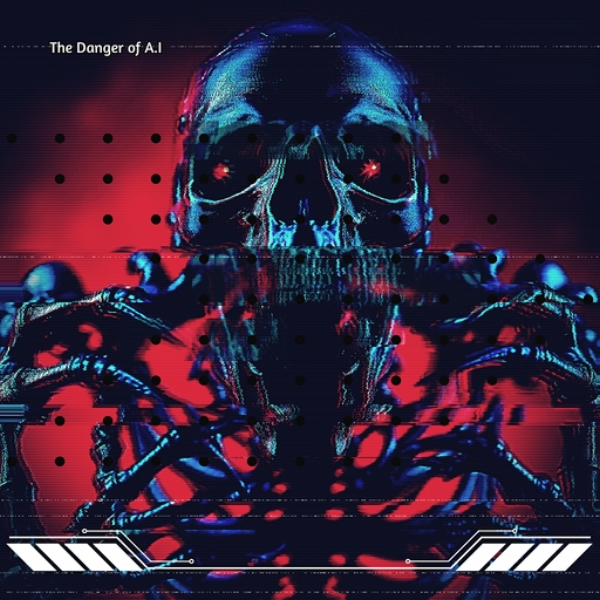
Cover Art slightly enhanced + mid frequencies added to the bass and mid range frequencies added to the arp and drums remastered.
Oct 12, 25
The mix is definitely getting updated again I can still hear frequencies that can be adjusted
republished
Oct 10, 25
mastering update
republished
Oct 10, 25
Cover Art + Drum gain adjusted
Oct 9, 25
I’m changing this cover very soon
republished
Oct 9, 25
pluck gain adjusted...
Oct 9, 25
really like this one
Oct 9, 25
thanks for caring!
Oct 9, 25
it fills better now, not all clashy.
Oct 9, 25
how does it sound now?
Oct 9, 25
if I had to make one comment, at , that Pluck that is in the beginning feels a little too loud, it kind of clashes with the other instrument introduced there. not really noticeable , but it is there. But it was so hard to tell because this song is so good.
this reminds me, a little think to note about some ai music generators, they sometimes will have a repetitive bassline or melody, and although some songs that aren't ai tend to do the same, it makes it harder to tell if some songs are ai or not
this nigga predicted the future like he's some sort of psychic
This concept was a joke I was thinking about and now it’s starting to be reality…
Cover Art slightly enhanced + mid frequencies added to the bass and mid range frequencies added to the arp and drums remastered.
The mix is definitely getting updated again I can still hear frequencies that can be adjusted
mastering update
Cover Art + Drum gain adjusted
I’m changing this cover very soon
pluck gain adjusted...
really like this one