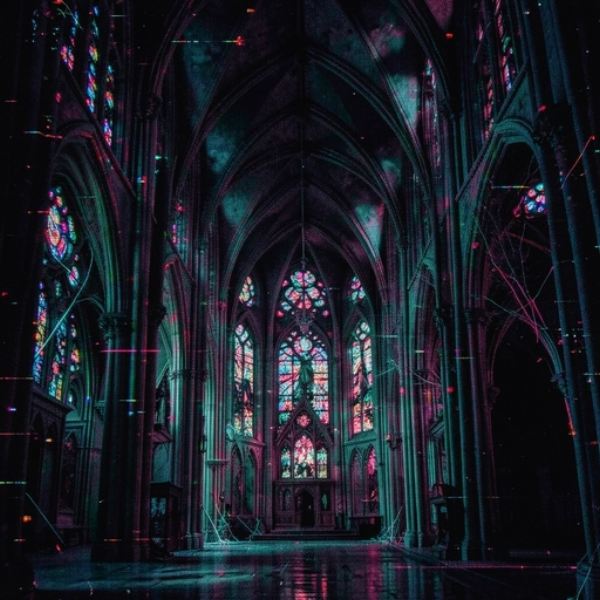
Liturgical Rustwave is basically what it would sound like if you found a ruined cathedral inside an abandoned data center and turned the echo into music.
It’s heavy, slow, and deeply atmospheric electronic music built from broken industrial sounds, warped choirs, and bass that feels more like pressure in your chest than something you’re meant to “hear.” Everything in it sounds aged or damaged—like it’s been copied and corrupted too many times to stay clean.
Instead of normal drums, you get mechanical rhythms: distant impacts, glitchy pulses, and uneven timing that feels like a system struggling to stay online. The melodies usually come from stretched-out choir samples or fragments of Gregorian-style chanting, but they’re heavily distorted, so they feel more like memory than actual voices.
There are often no clear lyrics. If there are vocals, they’re quiet, distant, and buried under everything else—like someone trying to speak through static from another room, or another time.
The mood is hard to pin down. It’s not just dark or sad. It feels abandoned. Like something once meaningful is still echoing long after it stopped being maintained. You can imagine empty halls, flickering lights, broken servers humming in the background, and sound bouncing around spaces no one has been in for years.
Songs in this style don’t really build and drop in a normal way. They drift, swell, collapse, and glitch out. Sometimes they feel like they’re breaking apart while they play. Silence is just as important as sound.
At its core, Liturgical Rustwave feels like emotional residue left behind in machines—something half spiritual, half technological, and completely forgotten, but still trying to be heard anyway.
No comments yet. Be the first to comment!